The “returning soldier effect” is a controversial hypothesis that suggests a higher proportion of male births occur during and after major wars. This phenomenon was first observed in 1954, following World War II, with regard to white children born in the United States.
While some studies have shown a slight increase in male births after wars, the scientific community is divided on the validity and explanation of this effect. Some researchers attribute it to increased sexual activity among returning soldiers, while others suggest hormonal changes or other biological factors. However, the evidence is inconclusive, and further research is needed to confirm or refute this hypothesis.
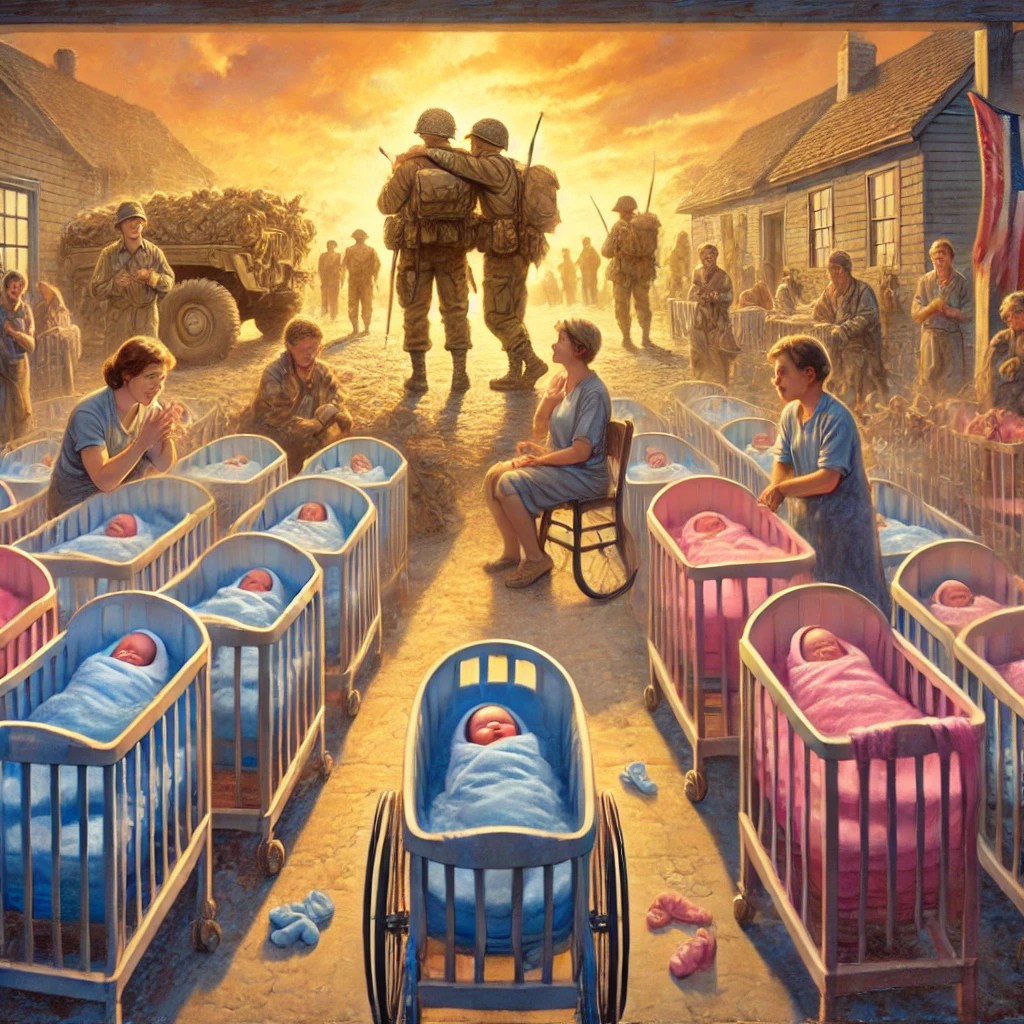
Several theories have been proposed to explain this:
- Survival of Taller Soldiers: Research by Satoshi Kanazawa suggests that taller soldiers are more likely to survive combat, and taller men are statistically more likely to father sons. Therefore, the surviving soldiers who return home might contribute to a higher male birth rate.
- Coital Rate Theory: Another theory posits that the frequency of sexual activity increases significantly upon soldiers’ return, potentially leading to conception at a time in the menstrual cycle when male babies are more likely to be conceived.
- Stress and Hormonal Changes: Psychological stress during wars might skew sex ratios, either by affecting conception rates or by influencing miscarriage rates, with male fetuses being more vulnerable to stress-induced miscarriages. However, the exact mechanism is still debated.
- Genetic and Hormonal Influence: It has been suggested that changes in hormone levels in women during wartime, as they might take on more dominant roles, could also influence the sex of offspring.
While this phenomenon has been noted in various historical contexts, the exact reasons remain under study, and not all theories are universally accepted. There are also exceptions where male birth rates have decreased during or after conflicts, indicating that the issue is complex with multiple influencing factors.
For further reference: The variations of human sex ratio at birth during and after wars, and their potential explanations – ScienceDirect
 Vedic Astrology
Leave a comment