Background: What Are POGs?
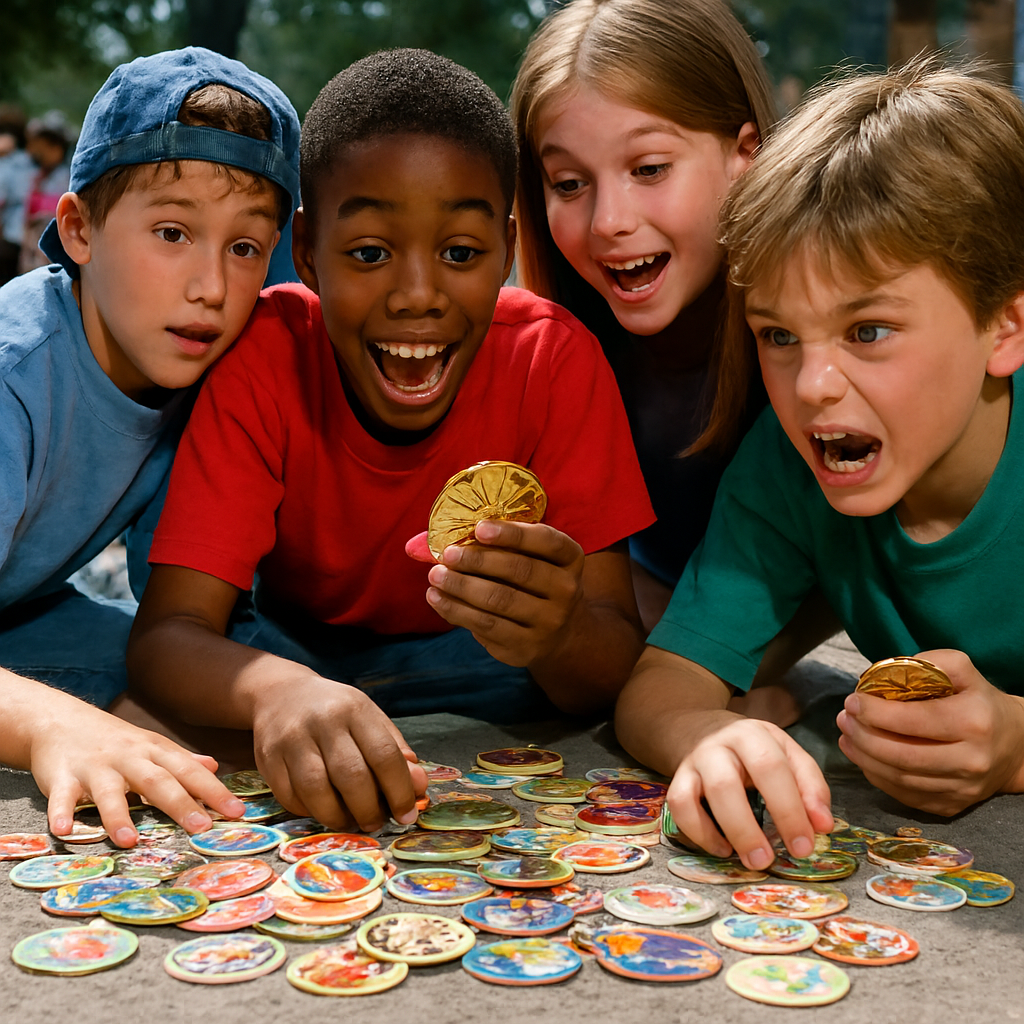
POGs, also known as milk caps, are small, circular cardboard discs that became the focal point of a wildly popular game during the early-to-mid 1990s. The game itself, often simply called “POGs,” involved stacking these caps and then using a heavier disc, known as a “slammer,” to strike the stack. The goal was to flip as many caps as possible, claiming as winnings those that landed face-up. Despite their simplicity, POGs held a unique magic, drawing in children worldwide and transforming playgrounds into battlegrounds for milk cap supremacy.
The name “POGs” is derived from a juice brand produced in Hawaii: Passionfruit-Orange-Guava (P.O.G.). The promotional caps from these bottles inspired the game’s resurgence, even though the concept itself was not entirely new.
Origins: Humble Beginnings in Hawaii
While the POGs craze took off in the 1990s, its roots trace back much earlier. The original milk cap game can be dated to the 1920s or 1930s in Hawaii. At the time, the foil and cardboard caps used to seal glass milk bottles doubled as tokens for a simple game: kids would stack them and try to flip them over by striking them with a heavier cap. This pastime was passed down through generations, evolving as the materials and available caps changed.
The true catalyst for the modern POGs boom came in the early 1990s. Blossom Galbiso, a Hawaiian schoolteacher, is often credited with reintroducing the game to her students as a way to teach math and social skills. She used the cardboard caps from POG juice bottles, and her classroom experiment ignited a spark. Word of the game spread, and soon, local businesses began producing milk caps specifically for play, complete with vibrant designs and branding.
The Meteoric Rise: POGs Become a Global Phenomenon
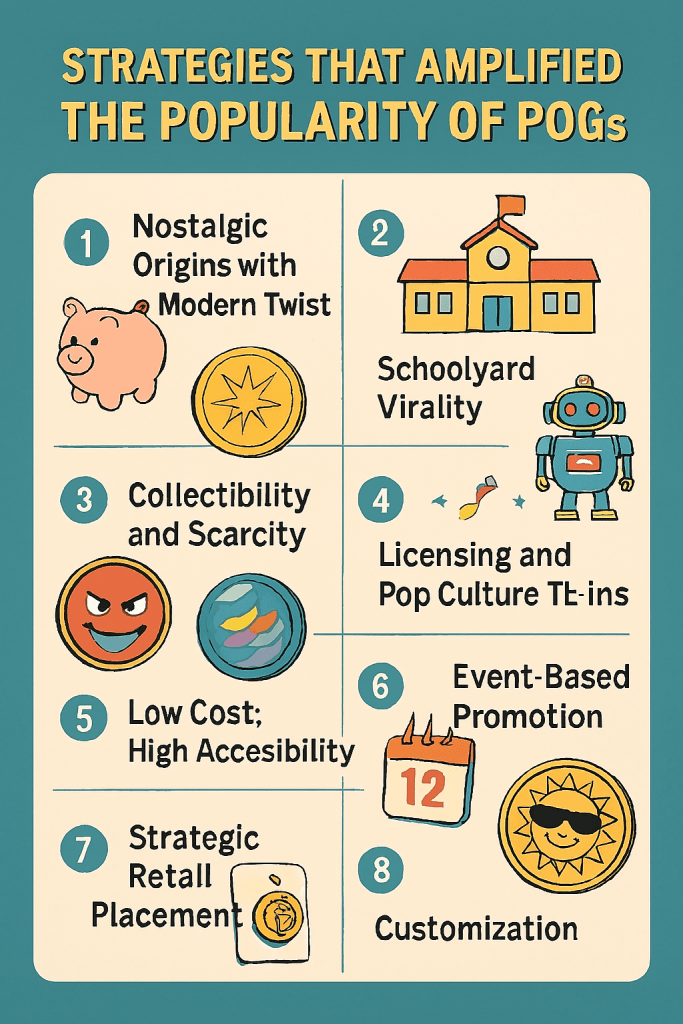
The leap from Hawaiian classrooms to international sensation happened rapidly in the early 1990s. Toy companies recognized the potential of the simple game, rebranding and mass-producing POGs with a dizzying array of designs—everything from cartoon characters and sports teams to holographic and limited-edition artwork.
POGs became the ultimate collectible, with children everywhere trading, winning, and losing their precious caps in high-stakes playground matches. The game’s low barrier to entry (all one needed was a handful of caps and a slammer) made it universally accessible, fueling an explosive period of popularity. Schools across North America, Europe, Australia, and Asia witnessed the POGs craze sweep through their halls almost overnight.
Media coverage, marketing tie-ins, and even POG tournaments added to the hype. Companies partnered with fast food chains and cereal brands, giving away exclusive POGs with meals or as box prizes. The collectible aspect fed a secondary market, with rare or limited-edition POGs fetching high prices at conventions or among collectors.
Cultural Impact: More Than Just a Game
POGs were more than a fleeting playground trend—they became a symbol of 1990s childhood. The game fostered social interaction, negotiation skills, and friendly competition. Friendships were forged and rivalries kindled through the game’s unique blend of luck and skill.
Children learned the thrill of winning and the disappointment of losing, often experiencing the sting of losing a prized cap to a classmate. The “for keepsies” rule, where won POGs were kept by the victor, brought genuine stakes to the game—sometimes leading to schoolyard drama or parental intervention.
The designs on POGs mirrored pop culture, featuring everything from comic book heroes to movie icons, reflecting the tastes and interests of the generation. The game also provided a physical, low-tech way for children to connect—a contrast to today’s digital forms of play.
Some educators and parents saw value in POGs as teaching tools for math, probability, and even conflict resolution. Others, however, worried about gambling elements or the potential for disputes, leading to bans in some schools.
Decline: Why Did POGs Fade Away?

As swiftly as POGs captured the imagination of millions, they faded into obscurity by the late 1990s. Several factors contributed to their decline:
- Oversaturation: The market was flooded with POGs of every conceivable design, diluting their value and uniqueness. The sense of rarity or collectibility weakened as more and more companies jumped on the bandwagon.
- School Bans: As disputes and complaints about the “for keepsies” rule mounted, many schools banned POGs from playgrounds, significantly reducing their arenas for play and competition.
- Shifting Trends: The late 1990s ushered in new distractions—video games, trading card games like Pokémon, and emerging digital entertainment. These new fads quickly displaced POGs as the preferred pastime for children.
- Lack of Innovation: While the basic game was addictive, it offered little room for evolution. Other games and toys provided deeper engagement or storytelling, leaving POGs behind.
The decline was as dramatic as the rise. Toy stores, once overflowing with POGs, shifted their attention to new trends. The milk cap era, it seemed, was over.
Legacy and Lessons: What Can We Learn from the POGs Phenomenon?

Although POGs are often remembered as a fleeting fad, their impact and the lessons they offer endure. Here’s what we can learn from their meteoric journey:
- The Power of Simplicity: POGs prove that a game need not be complicated or technologically advanced to capture the collective imagination. Sometimes, the simplest concepts are the most enduring and accessible.
- Community and Connection: The true magic of POGs was in the face-to-face interactions they encouraged. In a world increasingly dominated by screens, the nostalgia for such tangible social play remains strong.
- The Life Cycle of Fads: POGs are a textbook example of how fads explode and then fade. Oversaturation, lack of innovation, and changing cultural winds can end even the most beloved trends. Businesses and creators can look to POGs as both inspiration and cautionary tale for how quickly a market can change.
- Collectibility and Value: The secondary market for rare POGs showed how perceived rarity and uniqueness fuel demand. But when everything is collectible, nothing feels special—a lesson for the trading card, toy, and digital asset markets today.
- Physical Play vs. Digital Play: POGs represent an era when hands-on play reigned. As society debates the merits of digital and analog experiences, the popularity of POGs reminds us of the simple joys found away from screens.
A Final Spin: POGs in Retrospect
Today, POGs live on in the memories of those who played with them, and in the occasional nostalgia-driven collection or retro revival. They represent a unique cultural moment—a testament to the power of play, the unpredictability of trends, and the shared experiences that define childhood. Whether you won a prized slammer or lost your favorite cap, the era of POGs left its mark, spinning lessons for the next generation of games, toys, and the communities they build.
By 1996-1998, POGs had essentially disappeared from mainstream culture. The World POG Federation officially shuttered operations, Canada Games went out of business in 1997, and toy stores moved POGs to clearance bins. What had once generated millions in weekly sales became a nostalgic memory.
The POGs phenomenon serves as a textbook example of how a simple children’s game can explode into a global commercial success, only to collapse just as quickly when multiple factors align – regulatory pressure, market saturation, corporate mismanagement, and shifting cultural trends. The craze lasted approximately 3-4 years but left an indelible mark on 1990s popular culture and remains a defining childhood memory for millions of millennials worldwide
 Vedic Astrology
Leave a comment