
Introduction
In our modern, constantly busy world, silence has become a sought-after luxury. People instinctively seek moments of quiet to rejuvenate themselves. However, research reveals that while moderate silence can restore us, complete silence can be distressing both physically and psychologically. This delicate balance highlights not only the therapeutic benefits of quiet but also the limitations of human sensory tolerance.
The Restorative Effects of Silence

Physical Wellbeing
Natural quiet environments elicit immediate relaxation responses in the body. Scientific studies have shown that silence prompts physiological changes that counteract the damage of chronic noise exposure.
- Cardiovascular Relief: Just two minutes of silence can reduce both heart rate and blood pressure more effectively than relaxing music. Research from 2006 found these reductions in cardiovascular stress were more significant during silence than any musical intervention.
- Lowering Stress Hormones: Cortisol, the primary stress hormone, decreases significantly during quiet periods. Exposure to natural sounds or moderate silence results in lower cortisol levels than environments filled with speech or noise. Notably, working in moderate silence (35 dB) was shown to have a beneficial effect on stress compared to noisier settings.
- Improved Cognitive Focus: Studies involving silent work environments report less mental strain and lower stress among participants. Quiet allows for better focus by reducing the need for the brain to filter out distractions.
Neurological Regeneration
One remarkable study in 2013 from Duke University discovered that two hours of daily silence can stimulate new brain cell growth in the hippocampus—the area responsible for learning and memory. This process, called neurogenesis, was previously thought to require more intensive stimulation, but silence alone was enough to promote meaningful cognitive enhancement.
- Experiments with mice showed that while various sounds triggered neural activity, only silence produced lasting increases in functional neurons.
- Silence also activates the Default Mode Network (DMN) in the brain, fostering self-reflection, memory consolidation, and creativity.
Emotional and Psychological Benefits
Silence offers psychological advantages beyond relaxation:
- Present-Moment Awareness: Research shows that people in silence become more focused on the present, reducing rumination and worry that contribute to anxiety and depression.
- Improved Mood: Participants report higher levels of relaxation and better moods following periods of silence.
- Reduced Boredom: Contrary to expectations, people exposed to solitary silence seldom feel bored and experience lower mental fatigue.
When Silence Hurts
Moderate silence is healing, but extreme quiet can be difficult for humans to tolerate. Most individuals cannot endure absolute silence for more than 45 minutes.
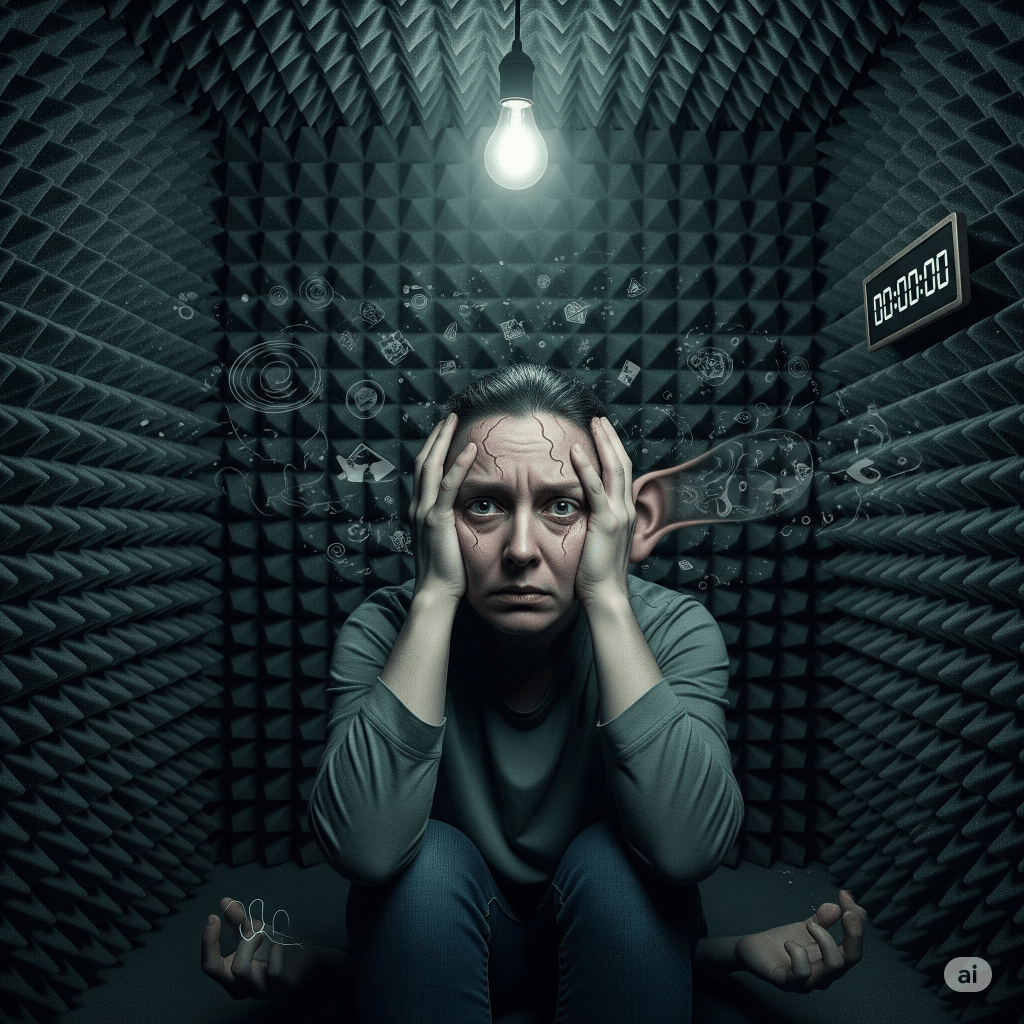
Studies in Anechoic Chambers
Research conducted in sound-absorbing anechoic chambers reveals the limits of silence tolerance.
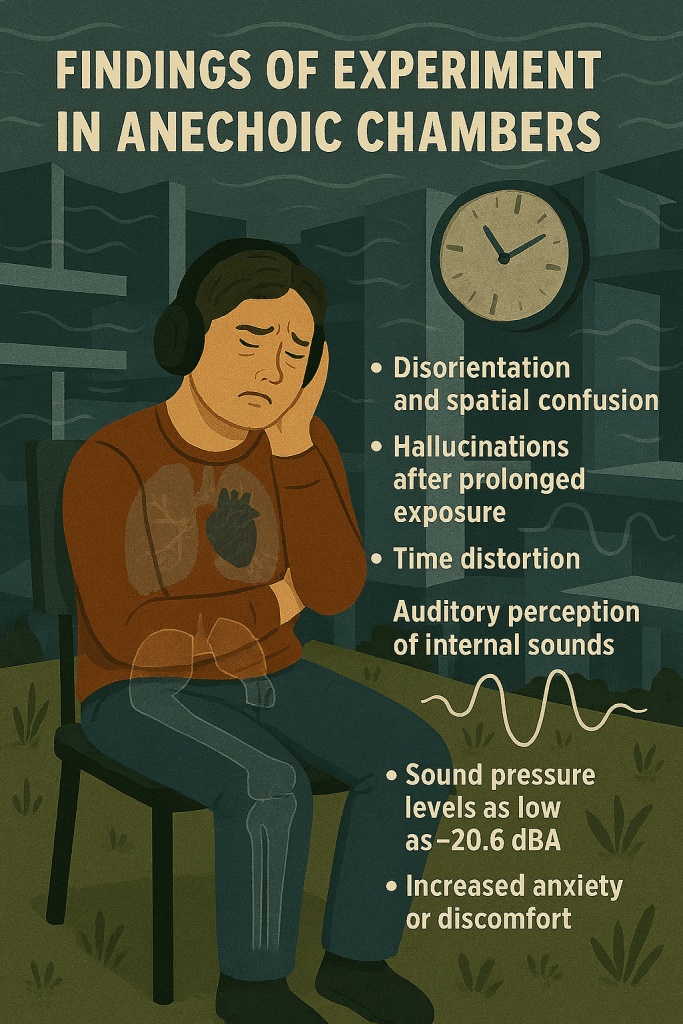
- Distress Response: People in these chambers feel significant psychological discomfort within minutes, with the longest stay recorded just over an hour. Most find the experience deeply unpleasant after 15–30 minutes.
- Phantom Sounds: In total silence, 74% of participants experience auditory hallucinations, hearing sounds that do not exist. This occurs because the brain, lacking external auditory input, heightens its own activity.
- Amplified Internal Sounds: In these environments, the sounds of one’s own body become overwhelming and contribute to discomfort and disorientation.
Neurological Explanations
- Evolutionary Survival: Humans may be hardwired to interpret complete silence as a threat, since in nature, sudden quiet may indicate danger.
- Homeostatic Plasticity: The brain attempts to compensate for the lack of sound by increasing sensitivity, which can lead to the perception of phantom noises.
- Cross-Modal Reorganization: Auditory deprivation can lead the brain to recruit other sensory areas, causing further disorientation.
Key Experiments and Findings
- Duke University Neurogenesis Study (2013): Mice exposed to silence produced more new, fully functional neurons in the hippocampus compared to other sound conditions.
- Phantom Sound Study (2022): In anechoic chambers, most participants reported hearing phantom sounds. The experience was more unpleasant for those feeling fear, even though fear did not increase the likelihood of hallucinations.
- Cortisol Studies: Silence resulted in the lowest stress hormone levels, with positive effects observable after less than an hour. Exposure to forest sounds also decreased heart rate and sympathetic nervous system activity, contributing to feelings of comfort and relaxation.
The Quietest Places on Earth
Silence is not distributed evenly across the planet. While some locations resound with the din of civilization, others are havens of tranquility.
Natural Quiet
- Hoh Rainforest, Washington, USA: Renowned as one of the quietest places in the natural world, this ancient temperate rainforest absorbs sound and offers a profound sense of peace.
- Antarctica: With vast stretches of ice and minimal human activities, the continent provides an almost otherworldly silence.
- Namib Desert, Namibia: The desert’s expansive dunes muffle ambient noise, creating an enveloping stillness interrupted only by the wind.
- Tasmania Wilderness, Australia: Far from urban centers, the Tasmanian wilderness offers an unbroken hush, disturbed only by the calls of native wildlife.
Man-made Silence
- Orfield Labs Anechoic Chamber, Minneapolis, USA: The chamber holds the Guinness World Record for quietest room, at −9.4 decibels. It is so quiet that the absence of sound can become a psychological challenge.
- Microsoft’s Anechoic Chamber, Redmond, USA: Measuring −20.3 decibels, it surpasses the Orfield chamber, providing an almost total absence of sound for acoustic testing.
- South Pole Station, Antarctica: The isolation and extreme weather ensure an environment almost devoid of sound, apart from the occasional hum of scientific equipment.
Conclusion: Achieving Acoustic Balance

Scientific research into silence underscores an important aspect of human nature: we are inherently attuned to complex acoustic environments rather than complete absence of sound. Although the pervasive noise of modern life creates a legitimate need for quietude, prolonged exposure to total silence can be uncomfortable due to fundamental neural processes tied to survival.
Natural quiet offers demonstrable therapeutic benefits—including significant reductions in cortisol, improvements in cardiovascular health, and enhanced cognitive function—making the preservation of tranquil spaces a matter of public health concern. At the same time, the discomfort generated by absolute silence highlights the necessity for nuanced acoustic design that supports optimal human environments, rather than striving for the total elimination of sound.
Whether one seeks the restorative quiet of Haleakalā crater, the peacefulness of a forest preserve, or moments of calm within daily routine, the goal is to establish an environment where tranquility promotes well-being without detracting from essential sensory engagement with the broader world. Within this equilibrium, silence emerges as a valued presence—a resource for renewal and holistic wellness.
In light of escalating environmental noise, safeguarding areas of genuine quiet is not only an act of conservation but also a vital contribution to human health. These sanctuaries demonstrate the potential losses incurred when noise becomes ubiquitous and illustrate the profound gains achieved by preserving spaces where authentic peace and quiet prevail.
 Vedic Astrology
Leave a comment