Introduction: Cracks in the Fabric of the Everyday
We move through the world guided by a set of common-sense assumptions. We believe we are in conscious control of our choices, that our awareness is a product of the intricate wiring of our brain, and that death is the definitive end of our story. But what if these foundational beliefs are not as solid as they seem?
Across diverse fields—from neuroscience and quantum physics to deep philosophical inquiry and ancient wisdom traditions—profound cracks are appearing in the fabric of our everyday reality. The ideas emerging from these disciplines are not just academic curiosities; they represent a series of seismic shifts in our foundational understanding of the world and our place in it. The following five takeaways are poised to challenge what you think you know about everything.
——————————————————————————–
1. Your Brain Makes Decisions Before “You” Do
One of the most unsettling discoveries in modern neuroscience directly challenges our cherished belief in free will. In modern versions of the landmark Libet experiment, researchers can accurately predict a person’s simple choice—like whether to move their left or right hand—seconds before the person is consciously aware of having made a decision.
By monitoring brain activity, scientists can identify the preparatory signals for an action well before the subjective feeling of “I choose to do this” arises. The implication is profound: our conscious feeling of making a choice might be an illusion, a story our mind constructs after the brain has already initiated the action. As neuroscientist Uri Maoz describes the experimental goal, researchers are looking for the neural precursors to a choice before the subject is even aware of it.
We’re interested in is finding the difference between Preparatory activity towards moving the left hand versus moving the right hand to be able to predict which hand you will raise before the go signal telling you to raise your hand is even there.
This idea is further supported by experiments using hypnosis. When a subject is hypnotized to perform an action but lacks the conscious feeling of authorship or agency, their brain’s motor activity looks identical to when they perform the action voluntarily. This suggests that the conscious feeling of “will” isn’t essential to the action itself, raising the startling possibility that what we call “choice” is a retroactive explanation, not the cause, of our behavior.
This neurological challenge to our sense of self is profound, but it remains contained within the skull. The next idea takes this mystery and expands it outward, questioning not just the self, but the very fabric of the cosmos.
2. Consciousness Isn’t Just in Your Head—It Might Be the Fabric of the Universe
What if the brain doesn’t create consciousness, but rather acts as a receiver for it? This is not a new idea, but a cornerstone of a philosophical school known as Idealism, which posits that reality is fundamentally mental or conscious. While the standard scientific view holds that consciousness is an emergent property of complex brains, this radical alternative is gaining ground.
Author and science communicator Annaka Harris, who works closely with neuroscientists, began her research firmly in the materialist camp. However, through the process of writing and investigating the “hard problem” of consciousness, she found herself logically pushed toward the opposite conclusion. This intellectual journey was so counterintuitive that she hesitated to even speak of it with her colleagues.
I think I’m convincing myself that Consciousness is fundamental but that[’s] like I can’t tell anyone that sounds sounds crazy even to me and I mostly work with neuroscientists and I know this is going to sound pseudoscientific to them.
This perspective has deep roots in both Eastern traditions, such as Advaita Vedanta, and Western philosophy, from Plato to Immanuel Kant. Even some pioneering physicists of the early 20th century, grappling with the bizarre paradoxes of quantum mechanics, were drawn to this conclusion. As Sir James Jeans famously wrote, “the Universe begins to look more like a great thought than like a great machine.”
If consciousness is indeed the fundamental stuff of reality, rather than a fleeting product of the brain, it radically alters our most final assumption: that death is the end.
3. Death May Be a “Stubbornly Persistent Illusion”
Our deepest fear is rooted in the belief that death is the final end of consciousness. But if consciousness is more fundamental than matter, this entire framework collapses. The theory of biocentrism, for example, posits that life and consciousness are central to the universe, and that reality itself may not take a definite form until a conscious observer perceives it.
This idea finds surprising resonance in quantum physics. Experiments like the famous two-slit experiment show that fundamental particles behave as a wave of probabilities when unobserved, but collapse into a single, definite particle the moment they are measured. This suggests that reality is not a fixed, independent “thing,” but a process that involves the observer. If consciousness is not merely a product of the physical body, then the death of the body may not signify its end.
This quantum-informed perspective, which dissolves the solidity of our material world, also fundamentally alters our understanding of time—an idea Albert Einstein, grappling with his own revolutionary physics, captured eloquently when mourning the death of a friend.
“Now he has departed from this strange world a little ahead of me. That means nothing. People like us…know that the distinction between past, present and future is only a stubbornly persistent illusion.”
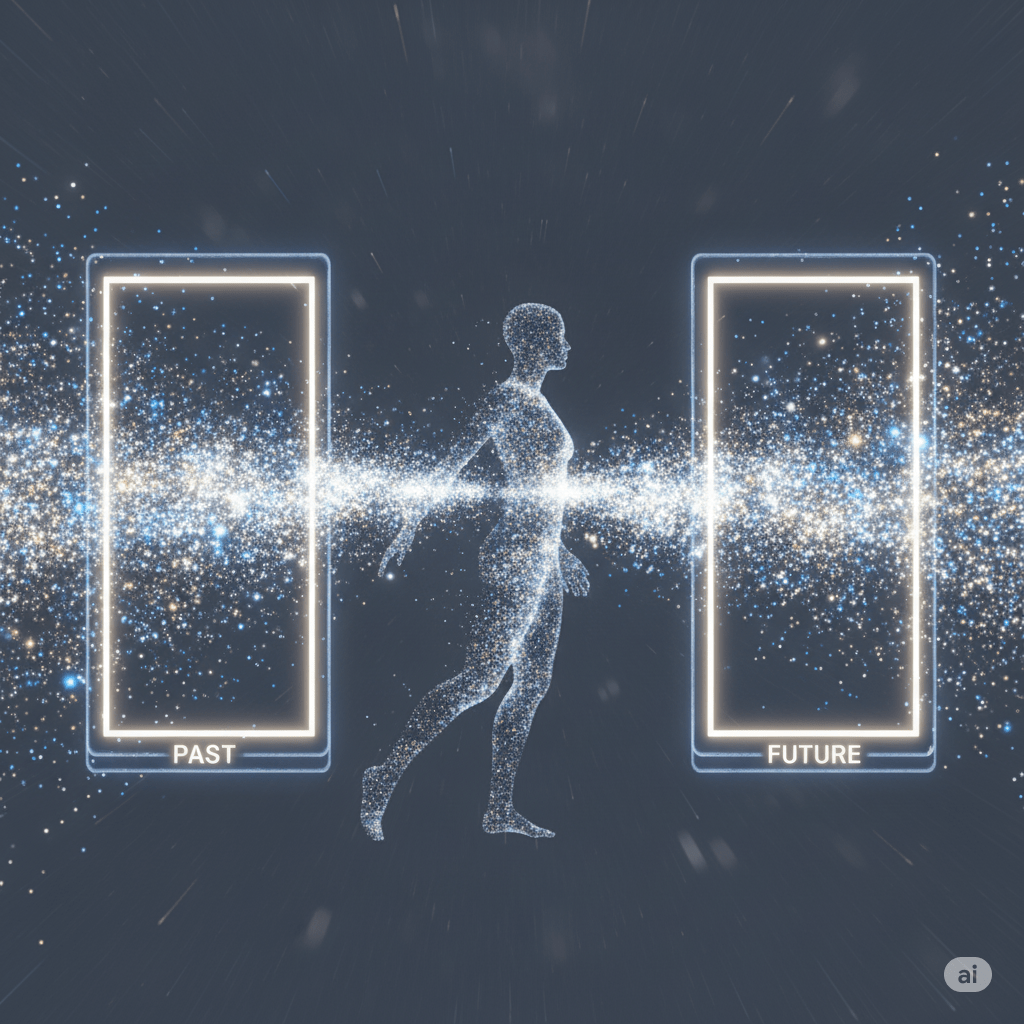
Another avenue for this thought comes from the “Many Worlds Interpretation” of quantum mechanics. This theory suggests that every possible outcome of a quantum event plays out in a separate, parallel universe. In this model, our consciousness may simply continue in one of the infinite branches where we survive, making our subjective experience a continuous thread through the multiverse.
4. Young People Aren’t Losing Faith—They’re Redefining It
A common narrative suggests that younger generations are becoming progressively more secular. However, a 2024 global Pew Research Center survey reveals a much more nuanced picture, challenging this oversimplification.
The key finding is that while belief in God does tend to decrease with age in many parts of the world, other spiritual beliefs are just as common among younger adults as they are among their elders. These include beliefs in an afterlife or the idea that spirits can reside in animals and parts of nature like mountains, rivers, or trees.
This trend is starkly illustrated in a highly secular country like Sweden. While only 7% of Swedish adults say religion is very important in their lives, a much larger share—38%—believe in life after death. This suggests that the decline of organized religion does not equate to the death of spirituality. Instead, what may be occurring is a profound shift away from traditional, institutional faith toward a more personal and individualized form of spiritual belief.
5. The World Is a Reflection, and You Are the Mirror
A powerful metaphor from the Advaita Vedanta school of Hindu philosophy, as explained by Swami Sarvapriyananda, offers a profound way to reframe our relationship with the world. It asks us to imagine that the entire universe—with all its chaos, beauty, suffering, and joy—is like a city reflected in a vast, perfect mirror.
In this metaphor, the “mirror” represents pure Consciousness—not the chattering thoughts of our mind, but the silent, underlying awareness in which those thoughts appear. Vedanta posits this awareness as our true, fundamental nature. The “reflection” is the sum total of our life’s experiences: our aging body, our emotional turmoil, our successes and failures. The core insight is that the mirror itself is never affected by what it reflects. A reflection of a fire does not burn the mirror; a reflection of a storm does not disturb its tranquility.
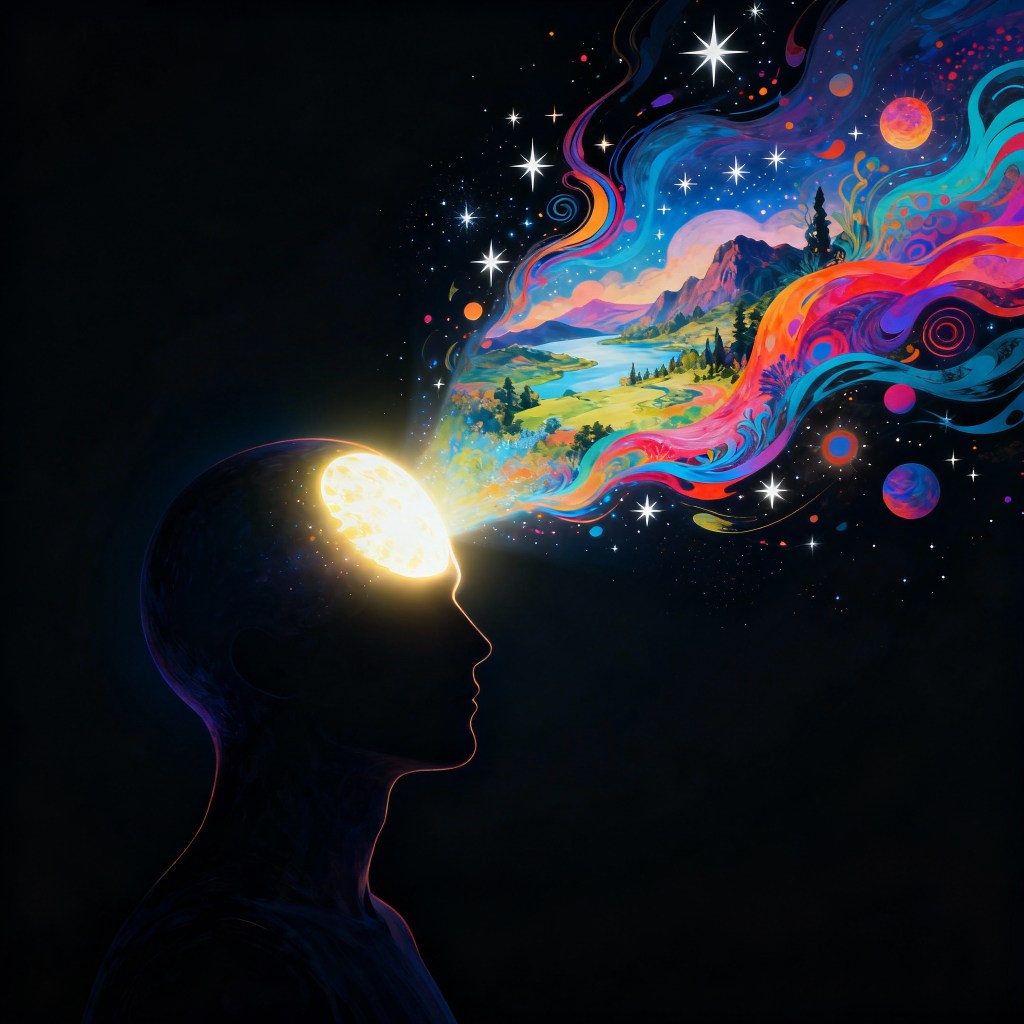
The implication for human life is transformative. If our true nature is the unchanging, witnessing consciousness (the mirror), then the events of our life (the reflections) pass through our awareness without fundamentally altering who we are. At our deepest core, this perspective suggests, we are free and untouched.
This concept of a witnessing consciousness echoes the findings of modern neuroscience. If our brain makes decisions before “we” are aware of them, perhaps our true nature is not the actor making choices, but the silent, unchanging mirror in which the actions simply appear. This aligns with the related Vedantic idea, cited by Swami Sarvapriyananda as a teaching from Holy Mother Ma Sarada Devi, that our waking state is also a kind of dream—an appearance arising within the boundless space of consciousness.
——————————————————————————–
Conclusion: What If Reality Isn’t What It Seems?
From the inner workings of our brain to the fundamental nature of the cosmos, our most basic assumptions about reality are being fundamentally challenged. The ideas we’ve explored suggest a radical inversion of our everyday perspective: the “self” we assume is in control may be a post-hoc narrator of the brain’s actions; the consciousness we assume is in the self might be what the self is in; and the death we assume brings an end to the self may be an illusion created by our limited perception of time.
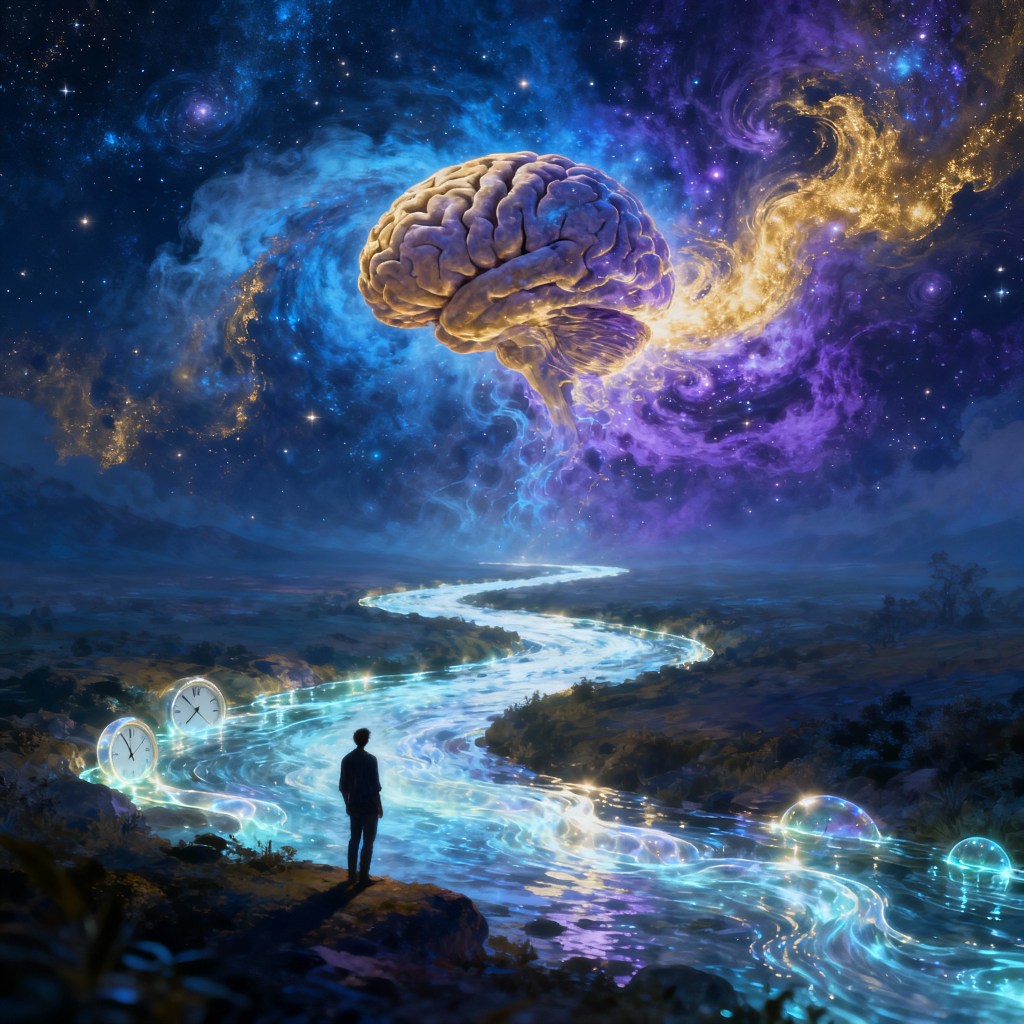
These are not just intellectual exercises; they invite us to question the very ground we stand on. If our deepest intuitions about the self, life, and the cosmos are built on such shaky ground, what other profound truths might we be ready to discover?
 Vedic Astrology
Leave a comment