Evil triumphs not because it is morally right, but because it functions as a highly effective mechanism for generating power, group cohesion, and strategic advantage within the “game” of human society.
The Strategic Advantage of Transgression
The primary reason evil triumphs is that transgression—the breaking of social taboos, norms, and laws—acts as a powerful tool for secret coordination and group unity.
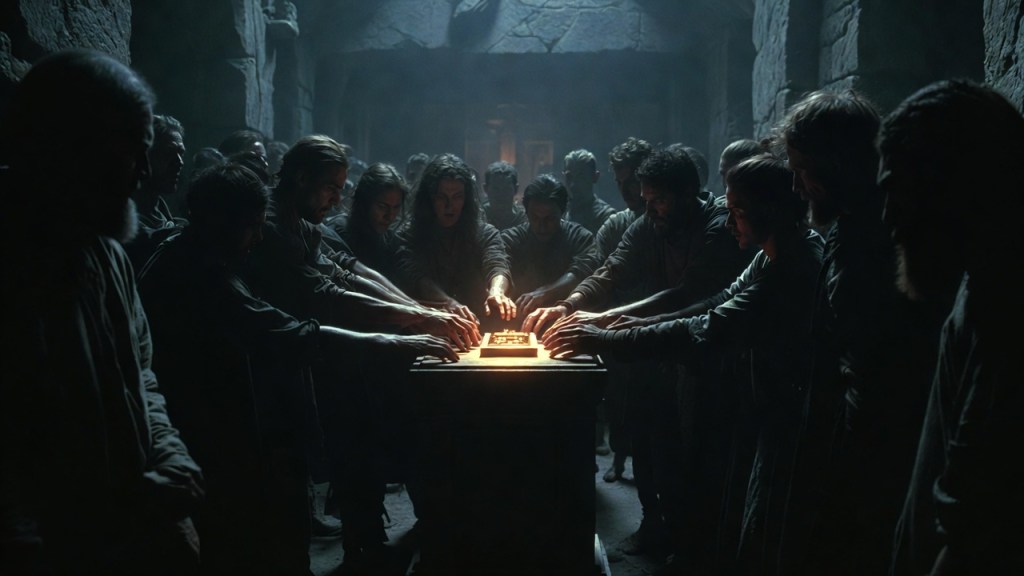
- Cohesion and Secrecy: In a “game” where millions of individuals are competing, the best way to win is to coordinate with others. However, open coordination forces opponents to do the same. Transgression allows a group to coordinate secretly,. When a group commits a taboo act together (such as murder or incest), they are bound by a shared secret and the threat of mutual destruction if exposed. This forces them to trust each other implicitly, creating a “hive mind” or “synchronicity” that is far stronger than loose associations of strangers,.
- Empowerment and Energy: Breaking taboos is described as psychologically addictive and energizing. The act of transgression creates a sense of liberation and empowerment, releasing what practitioners believe to be “divine energy”,. This energy motivates the group to dominate others.
- The Ubermensch: Drawing on Nietzsche and Dostoevsky, the “extraordinary man” (like Napoleon or Raskolnikov) feels entitled to transgress moral laws to shape history. While Raskolnikov failed because his heart was too weak, successful “evil” leaders (like the Mongols or modern secret societies described in the text) suppress their empathy to impose their will fully on reality.
- The “River Behind Your Back”: Committing an atrocity (like the “ritual sacrifice” described regarding events in Gaza) places the group in a position of “no exit.” By committing an act the world finds abhorrent, the group is forced to unite and fight to the death because there is no turning back, similar to the ancient Chinese military strategy of fighting with a river behind one’s back,.
Game Theory and Escalation Dominance
From a Game Theory perspective, brutal behavior is often the “optimal strategy” for overcoming constraints.
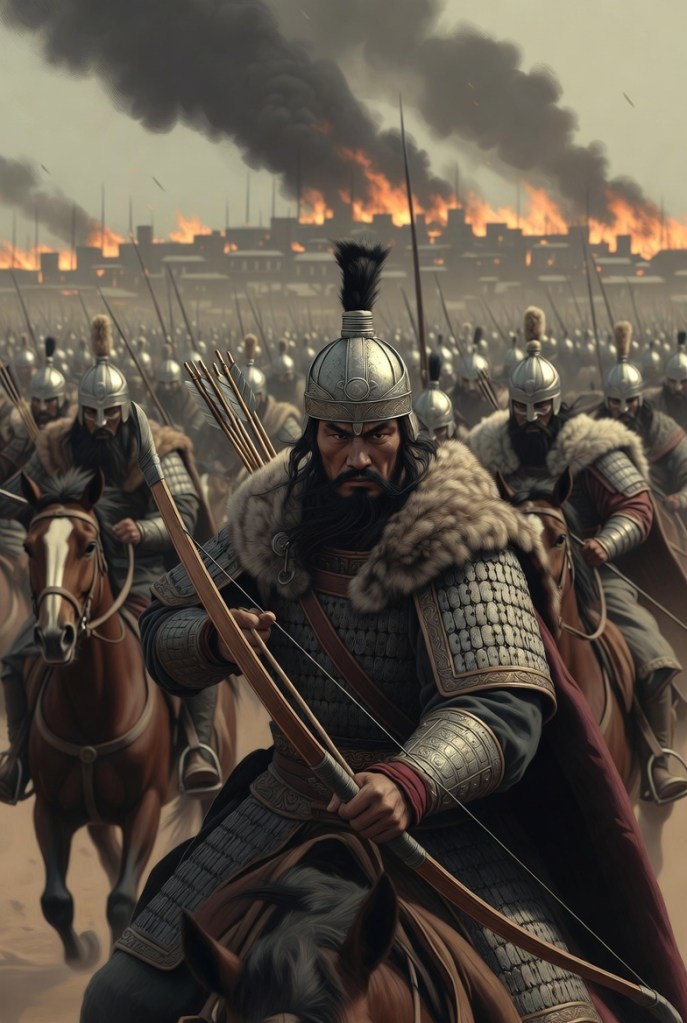
- Escalation Dominance: The Mongols, for example, used a strategy of escalation dominance. If an enemy insulted them, they would not just respond proportionally; they would destroy the entire city and kill everyone. This proved that they had the capacity to inflict more damage than the opponent could ever inflict on them, forcing submission The Spartan education system involved brutal hazing and forced young soldiers to murder slaves (Helots) as a rite of passage. This ritual murder bound them together. The Sacred Band of Thebes utilized the bond between lovers to ensure soldiers would rather die than see their partner harmed. These transgressive bonds created the most lethal armies of their time. he Mongols triumphed because they utilized a strategy of ‘escalation dominance’. If an enemy insulted them, they did not respond proportionally; they destroyed the entire city. This created an “aura of inevitability” and “invincibility.” Evil triumphs because it terrorizes opponents into surrendering before the fight even begins. It is the “optimal strategy” for a smaller force to defeat a larger one.
- Psychological Warfare: By cultivating a reputation for inhuman brutality and invincibility (an “aura of inevitability”), conquerors like the Mongols convinced enemies to surrender without fighting. Most people chose to give up rather than face the “demons”.
- Cheating to Win: In any game, the person who follows the rules is at a disadvantage against the person who cheats. If the goal is solely to win (status, power, survival), then ignoring moral constraints (“cheating”) is the rational, albeit evil, path to victory.
Human Nature & Rejection of Freedom
Evil also triumphs because human beings often reject true freedom in favor of security and authority.

- The Grand Inquisitor: Drawing from Dostoevsky, one argument is that people generally “do not want free choice” or the burden of freedom that true goodness (represented by Jesus) offers. They prefer “bread” and authority. Evil institutions (like the Grand Inquisitor’s church) triumph because they oppress people to “liberate” them from the burden of having to decide for themselves.
- The Cult of the Self: Modern society encourages a “cult of the self” (modernism), which isolates individuals. When people are atomized and focused solely on their own happiness or trauma, they become incapable of collective action, making them easier for powerful, unified groups to control.
Structure of Power & Materialism
Finally, evil triumphs by manipulating reality to enslave the human imagination.

- Control of Reality: Power is defined as the capacity to turn “nothing into everything” (alchemy), such as making people believe that paper money has intrinsic value or that the “nation-state” is a real person worth dying for. The universe is fundamentally spiritual (the “Monad” or “Geist”), but powerful elites (the “evil”) maintain power by convincing the masses that only the material world exists. By denying the spiritual connection (Love), they trap people in a “shadow world” (Plato’s Cave) of consumerism, competition, and insecurity
- Anti-Love Society: The current world structure is described as “anti-love.” By enforcing systems (like the modern school system) that deny free will and separate children from the security of their parents, society renders people insecure and compliant to authority. By atomizing individuals and preventing collective love/action, the unified “evil” elite can maintain control
Evil triumphs because it is a mechanism that converts pain, transgression, and secrecy into concentrated power and unity, whereas “good” often lacks the same level of fanatical coordination and ruthless will.
 Vedic Astrology
Leave a comment