The Psychology of the First Shard
The Broken Window Theory is a big idea in modern criminology, and it’s also a bit of a hot topic! James Q. Wilson and George L. Kelling first put it out there in 1982. The idea is that when you see things like broken windows, graffiti, litter, vandalism, and public drunkenness, it might mean that social control isn’t as strong as it should be. This could lead to more disorder and, eventually, more serious crimes. The main idea isn’t that a broken window directly causes someone to commit a felony, but that if disorder isn’t kept in check, it shows that there’s a lack of care, less community watch, and changes how people use public spaces.

In criminological terms, the theory is all about how the environment, social rules, and fear of crime are connected. Britannica says that the “broken window” is like a metaphor: when small problems aren’t dealt with, it suggests that no one is in charge, which makes it more likely that other rules will be broken. Kelling’s work for the National Institute of Justice also points out that keeping things orderly is a way for police to prevent crime, saying that officers often use their judgment not just to enforce laws but to keep public order.
From Theory to the Streets of New York
This theory had a big impact on policy, especially in the United States during the 1990s. It led to what’s called “broken windows policing,” which focused on minor offenses and things that affect how people feel about their environment. People who supported it thought that tackling small problems early could stop them from turning into bigger crimes like robbery and assault. This made the theory appealing to policymakers because it seemed like crime prevention could be done through simple actions in the community, instead of waiting for big changes in the system.
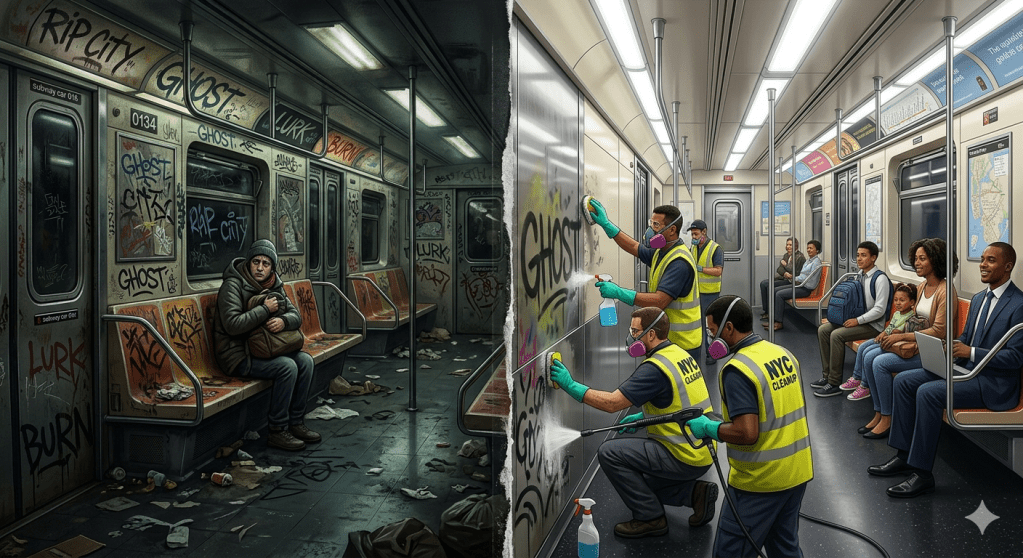
Even though the theory is still a bit of a hot topic, it’s hard to pin down because the evidence isn’t always clear-cut, and how it’s been put into action has been questioned. The National Institute of Justice points out that the connection between disorder and serious crime is more complicated than we thought at first. More recent criticisms, like those from the Brookings Institution, suggest that “broken windows” policing led to harsh punishments for small offenses, which unfairly affected marginalized communities and didn’t really help reduce violent crime. Critics say that in reality, the theory often meant overpolicing instead of creating balanced plans to improve neighborhoods.
Conclusion
Looking at it from a criminological point of view, the Broken Window Theory still has some value, but it’s not because it says disorder always leads to crime. Instead, it emphasizes that where things are can really matter. Physical disorder, how well people get along, how much police have to decide, how much people trust the police, and how much money is invested in neighborhoods all play a role. So, when we think about the theory’s impact, we should be careful: it helped us pay attention to the environment in criminology, but it also showed us the risks of turning a complex social idea into a strict rulebook for policing. If we use it wisely, it can help us talk about how to prevent crime and run cities better. But if we don’t think critically about it, it might make us mix up what looks bad with the real reasons why crime happens.
 Vedic Astrology
Leave a comment